THE PERIOD PIANO CENTER

A California Non-Profit Corporation

Period Piano Center    email contact    Donations

Bill Shull, RPT, M.Mus.  Founder and President

25041 Redlands Blvd., Loma Linda, CA  92354   909 796-4226   www.periodpianos.org

 (not affiliated with the excellent for-profit Period Piano Company in England - www.periodpianos.com)

The Early Steinway Project    Piano Database    The Period Piano Center Collection

   Chickering Studies            Registries of 5 Leading American Manufacturers  

 .Conservation of 19th Century Pianos       The Early Steinway Classes       Early Steinway Registry

Click here to email photos        Donations        Mission Statement      Volunteer Work Days        Board of Directors


Making a Contribution to the Period Piano Center

Please make checks payable to “Period Piano Center,” and send to Period Piano Center, 25041 Redlands Blvd, Loma Linda, CA  92354

OR click on the Paypal link on the top of this page to pay by credit card

Contributions of $100 or more will receive the “Ravel Revealed” CD

Expenses of the Period Piano Center:

Current and Immediate Expenses:

1.  Legal and filing costs for Period Piano Center to attain non-profit corporation status with the IRS, as well as other filing fees. 

2.  Cartage of donated concert grands from the east coast to southern California.  One Steinway and one Erard, they will be restored for performance use by Period Piano Center.

3.  Exhibit costs.  Education is critical to the mission of the Period Piano Center, and conference exhibits are one of the best places to fulfill this mission.  In one recent exhibit we were joined by Laurence Libin, curator emeritus, Metropolitan Museum of Art and honorary curator, Steinway and Sons;  another included a lecture-recital with Erard/Ravel specialist Gwendolyn Mok.

4.  Cartage for artifacts.  Pianos are shipped from distant locations, and the cartage cost is often nearly $1,000.  Other artifacts, including historic soundboards discarded by rebuilders, are costly to ship as well.  Currently an antique 1850s Steinway soundboard is waiting in New York City.

4. Conference Attendance:  Each year important conferences take place which the Period Piano Center President should attend, and occasionally exhibit and present at.  These include the AMIS Conference May 15-20 at the Metropolitan Museum of Art, New York, and the American Institute for the Conservation of Historic and Artistic Works, in Albuquerque, NM May 8-11. in Ann Arbor, MI.

5.  Ongoing research costs:  Research for the Steinway project and the Chickering project require archive work in various museums such as the Smithsonian in Washington, DC., the Strong Museum in Rochester, NY., the Wagner/Steinway Archives in New York City, NY., and many sites where pianos must be documented.  These costs include flight and hotel, transportation and museum access fees (the Strong Museum requires a $25 daily fee for camera use by researchers).   In addition, the pianos registries study requires research assistant support to permit significant hours at a microfilm machine converting registries to PDF documents.

Documentation Site Visits: 

Earliest Steinway pianos:  The Early Steinway Project cannot be completed until site visits are completed to document the earliest known complete original Steinway grand (San Antonio, TX), an example of the earliest ancestor to a modern Steinway (the Braunschweig 6’8” Steinway), an example of the earliest overstrung Steinway concert grand (Cape Cod, MA), and an example of the earliest model “D” Steinway concert grand (San Francisco, CA).   Additional registry studies are also required to complete the research database through the Early Steinway study period. 

Site visits require both the researcher, Bill Shull, of Loma Linda, CA, and the technical photographer, Larry Buck, of Lowell, MA., to travel to piano location.  Usually rental photographic lighting equipment is also required.

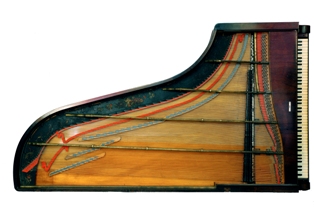
B. 1854 Bluthner 7’ grand, the earliest known Bluthner grand in America, Orinda, CA.  This extraordinary early Bluthner (Bluthner and Steinway were both founded in 1853) are in the home of an elderly couple who recognize its significance and will open their home for this lengthy documentation session.  The earliest Steinway grands look very much like this 1854 Bluthner, and the comparisons are valuable.

C.  Other pending visits:  Mission Inn Centennial Grand, Riverside, CA.  This 1876 early Steinway Concert Grand is the only Steinway we’ve found with an iron pulsator bar.   **The Cadillac Hotel Steinway “D” in San Francisco - one of the first generation of Steinway D’s, this piano was restored without replacement of existing belly components, making it a useful window into the innovations of Theodore Steinway.  Some unique features of Theodore’s “D” were discarded later, so this most unusual piano is an important artifact of history.

Many other pianos are waiting for visits, and others are yet to be discovered.   The above list is our most current agenda, which supports the writing deadlines required for a series of articles to be soon published on the early Steinway grand.

Ongoing Building and Utilities Expenses

Monthly storage and lease costs:  The collection is located in approximately 1000 square feet of museum exhibit space, and in two storage units.  The monthly leases, utilities and environmental control (humidity control is especially a problem in southern California) amount to approximately $1,000/month, and future facility and storage needs will be substantially higher.

Website Editing

The President is currently maintaining the website, which, in reality, requires a higher level of expertise than he possesses, both in terms of presentation and technical needs.  The website should be developed and maintained by a website professional.   It is particularly important to develop automatic data upload/download capability to support the large contribution Period Piano Center could make to the community of piano researchers by faciliting the web sharing of piano documentation photos and data.

Future Expenses

1.  Museum Acquisitions:  1.  Steinway Monitor Iron Grand #19434.  Discovered and documented in 2007 by Period Piano Center, this is the first Steinway in history to have most modern Steinway features, and the first of only seven prototype Iron grands, none others are known to exist.   Owner in Belgium will release this piano to us with payment of 2/3 asking price of $30,000, or approximately $20,000, plus about $4000 cartage and fees.  2.  Steinway grand #2162, the earliest known Steinway grand with original internal parts (strings,        action etc.). 

Initial Fundraising Event:  A dinner, concert and presentation to potential donors in order to provide the necessary capital infusion to begin the ongoing work, in order to meet museum rent, payroll, documentation site visit, exhibit, grant-writing and acquisition costs.   Eventually conservators, technicians, restoration specialists will be needed - the work is to large for one person. 

Why is this work important?  For many reasons, but one reason is to re-discover the music.  We recommend obtaining the DVD “Knowing the Score,” an extraordinary presentation on the importance of the period piano by renowned fortepianist and educator Malcolm Bilson.  The Period Piano Center is working to make possible the redisovery of music on pianos built in the 19th Century.   Documentation, restoration, conservation, performance, teaching - this will make possible for current and future generations of pianists the rediscovery of the music of Chopin, Liszt, Mendelssohn, Brahms...even Ravel and Debussy....on the pianos which they, themselves, heard their music on.  Piano students, majors, and others will soon have opportunity to hear and play the music of Chopin, Mendelssohn and Liszt - as well as Debussy and Ravel - on the Erard these composers most often heard their music on, and composed for.  And the early Steinways?  The pianos that catupulted Steinway to world-class concert status were not the ones we know today, but entirely different instruments, with more ancient construction and materials quickly being lost to the rebuilder’s trash heap.  Due to the resale value of used Steinways, and the complete refusal of the company to encourage or practice conservation of its early pianos, rebuilding and manufacturing of these early Steinways is ruining all early Steinways as good documents of history - essential for knowing how these pianos were built and how they really sounded and played.  Rather than turning these instruments into versions of modern Steinways, which is what the factory and most rebuilders are doing through commercial soundboard and action replacement, we seek to study and preserve the unique, vintage elements of these pianos so that the world might have an idea of what kind of musical instruments Steinway actually built from 1856 to 1892 - and we believe the music world will be delighted and grateful for what we conserve and carefully restore! 

Your contribution, large or small, will aid in this noble project.


[Home] [Pianos] [Organs and Harpsichords] [Actions] [Rebuilding] [Restorative Conservation] [Refinishing] [Accessories - Artist Benches] [DamppChaser Humidity Control Systems] [String Covers] [Testimonials] [Programs] [Rental] [Regular Piano Maintenance] [About Bill Shull] [Pianos We've Rebuilt] [About PTG] [Events, Open House Dates, Programs] [PTG Pomona Valley] [How to Buy a Piano] [Period Piano Center] [Piano Conservation] [The Collection] [Early Steinway Research Project] [Making a Contribution to Period Piano Center] [Piano Database] [Chickering Studies] [Ravel Revealed - Gwendolyn Mok at WESTPAC] [Mission Statement] [Volunteer Workdays] [Board Officers] [Registries of 5 American Piano Manufacturers] [A Western MIM] [Store and Shop Hours and Location]